
INTEGRATIVE AND HOLISTIC HIP PAIN DOCTOR SERVING GLENVIEW, EVANSTON, & CHICAGOLAND
Hip pain is a common concern for many people. It can be due to a myriad of factors. Dr. DeCaria has effectively treated hip pain from many different conditions through her unique approach that utilizes conventional medicine, as well as integrative and functional medicine.
The exact location of your hip pain indicates important information about the underlying cause of your pain. While pain in your groin or on the inside of your hip may indicate problems within the hip joint, if your pain is on the outside of your hip, your upper thigh, or outer buttock, the problem could be stemming from your ligaments, muscles, tendons, or other tissues surrounding your hip joint. Your hip pain could also be due to ‘referred pain,’ which is pain caused by other areas of the body, such as the lower back (spine) or even a joint known as the sacroiliac joint. Because it is so challenging to diagnose hip pain properly, it is essential you seek a doctor who specializes in chronic pain that can provide you with the right diagnosis. 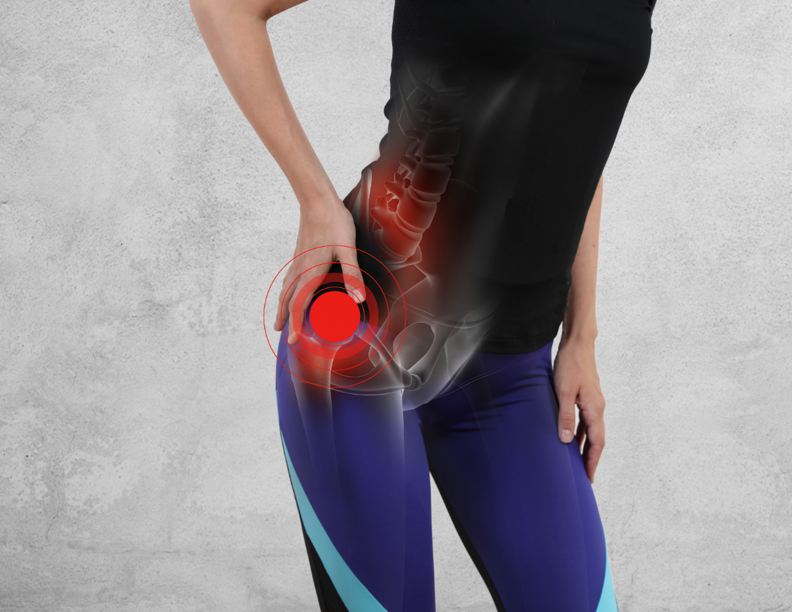
If you are having hip pain, the first step to fighting it is figuring out the source. Despite the variety of hip pain etiologies, below is a list of the most common causes of hip pain.:
- Osteoarthritis affects almost 27 million people and is one of the top causes of hip pain. In osteoarthritic hips, the cartilage that provides cushion for the joint begins to deteriorate which causes the bones to rub against each other during movement, rather than the cushion. This bone-on-bone movement creates stiffness, loss of movement, and pain. Because of this, your hip pain may get worse with any movement, you may experience reduced range of motion, or even develop a limp caused by the nagging hip pain.
- Pelvic floor issues can create hip pain. Our hips are attached to a set of internal muscles called the pelvic floor. The pelvic floor muscles help to keep the hip joint together. We use these muscles daily in activities such as walking, running, or jumping. Without proper, and strong, coordination of the hip and pelvic floor muscles, you may experience hip pain. Giving your pelvic floor muscles proper attention and care is crucial because these muscles are critical for hip stability. A weakened pelvic floor can create hip pain by, unintentionally, forcing you to use other muscles to compensate for the weakness and/or pain, which may leave you with poor form and pain.
- Trochanteric bursitis is another common cause of hip pain. The bursa is a fluid-filled sac which reduces friction and provides cushion between the tendons, bones, and muscles. It is located throughout the body and may cause degeneration in the surrounding soft tissues and bones. Irritation or overuse can cause these sacs to become inflamed and cause pain with movement.
- Tendonitis can cause hip pain in a similar manner as trochanteric bursitis. Tendons are a connective tissue which attach the muscle and bone together. Any of the tendons surrounding the hip joint can have tendonitis when they are irritated, inflamed, or swollen, and can cause intense hip pain. Besides possible irritation or inflammation, the tendons may lose their elasticity with age which can contribute to the hip pain.
- Muscle strains surrounding the hip and pelvis can cause hip pain. This can happen when one of the muscles which provide support for the hip joint is torn or overstretched. The more strained the muscle is, the more hip pain there is, and the greater likelihood of being unable to move your hip as usual. The most common muscle strains which cause hip pain are hamstring strains or groin pulls. A muscle strain can happen during intense exercise, or even while doing a simple task at home.
- Osteonecrosis is a painful condition in which there is inadequate blood flow reaching the bone. While it can happen to any area in the body, osteonecrosis most commonly affects the hip joint and can cause extreme hip pain. Our bone cells require a steady, healthy supply of blood to maintain our overall health, so osteonecrosis can be detrimental to the hip joint or cause severe arthritis. Osteonecrosis can take months or even years to progress, and it is beneficial to address it sooner rather than later.
- Stress fractures, hip fractures, or hip joint dislocation can create extreme hip pain. Stress fractures of the hip may cause pain in the front of the groin while moving around, and activities such as stairs or running may be extremely painful. Hip fractures are common with osteoarthritis in elderly patients due to the wear and tear of the bone. Hip joint dislocation where the ends of the hip bone are moved out of place may cause pain. This painful injury could inhibit your ability to walk and requires immediate attention. Fractures or dislocations can create severe hip pain and discomfort.
- Other causes outside of the hip itself include:
- Herniated disc in your spine causing referred pain to the groin
- Sacroiliac Joint Pain
Depending on the source of your hip pain, cause of your hip pain, and overall health, your treatment will be tailored to your needs to give you the most relief possible. Treatment can vary from topical treatments, to medications, to physical therapy, to steroid or other types of injections. Typically, surgery is a last resort when other measures have failed unless it is a specific condition that requires urgent surgery such as a fracture.
If you are experiencing any hip pain or believe you may be experiencing one of these conditions, call Revitalize Medical Center at 847-834-4018 to book your appointment with our double board-certified pain physician, Dr. DeCaria, today! She will work with you to learn more about you and your hip pain and to identify the root cause of your pain so you can get back to doing the things you love.